
| Citation: |
CHEN GuoFei, SHI Ying, GAO XingYou, WANG RuoYu. 2023. Pre-stack and post-stack joint inversion and application of high-quality reservoirs in NBR oilfield. Progress in Geophysics, 38(1): 159-170. doi: 10.6038/pg2023GG0521

|
Pre-stack and post-stack joint inversion and application of high-quality reservoirs in NBR oilfield
-
Abstract
Seismic prediction of high-quality reservoir is effective to support the producing reserves of low-efficiency well area and external expansion area in NBR oilfield, which is of great significance to improve oilfield productivity. To solve the problems of single parameter in post-stack inversion parameters and multiple solutions in pre-stack inversion, a three-step process is developed to realize pre-stack and post-stack joint inversion for the purpose of quantitative high-quality reservoirs characterization. Step 1 predicts the distribution of sandstone and mudstone by post-stack geostatistical inversion; Step 2 is the rock physical analysis, which shows that the shear modulus is the sensitive elastic parameter of oil-bearing sand body. Then, constrained by the results of Step 1, the pre-stack Extended Elastic Impedance (EEI) inversion is used to predict the oil-bearing property of the reservoir. Similarly, constrained by the results of Step 1, Step 3 uses Gaussian Collocation Co-simulation inversion for logging parameters to predict porosity and permeability. According to the boundary of physical properties in high-quality reservoir, the three-dimensional characterization of high-quality reservoirs is conducted by the shear modulus, porosity and permeability. In oil layer A the NBR oilfield, the coincidence percentage of the above method in predicting high quality reservoir reaches 78.3%, and the horizontal well deployment in preferred dessert area achieves a remarkable success.
-

-
References
Chen H Z, Yin X Y, Zhang J Q, et al. 2014. Seismic inversion for fracture rock physics parameters using azimuthally anisotropic elastic impedance. Chinese Journal of Geophysics (in Chinese), 57(10): 3431-3441, doi: 10.6038/cjg20141029.
Chen X S, Sun S, Zhang Z H, et al. 2009. Recognition of complicated reservoir by seismic inversion and its application in the Tamtsag Basin. Chinese Journal of Geology (in Chinese), 44(2): 700-706. doi: 10.3321/j.issn:0563-5020.2009.02.032
Jia L X, Wang Y C, Jian X F, et al. 2016. Problems and progress in post-stack seismic inversion. Progress in Geophysics (in Chinese), 31(5): 2108-2115, doi: 10.6038/pg20160530.
Jiang Y, Xu L H, Zhang X L, et al. 2013. Prestack geostatistical inversion method and its application on the reservoir prediction of Changyuan oil field. Progress in Geophysics (in Chinese), 28(5): 2579-2586, doi: 10.6038/pg20130537.
Lang X L, Peng S M, Kang H Q, et al. 2010. Application of prestack simultaneous inversion in fluid identification. Geophysical Prospecting for Petroleum (in Chinese), 49(2): 164-169. doi: 10.3969/j.issn.1000-1441.2010.02.010
Li A, Zhang L Y, Song Z P, et al. 2013. The application of the method of joint inversion of PP and PS waves in Bei39 zone of Hailar basin. Progress in Geophysics (in Chinese), 28(4): 1908-1918, doi: 10.6038/pg20130433.
Liu L H, Li J H, Yang X, et al. 2013. Exploration and practical study on seismic lithology of prestack AVO attribute. Geophysical Prospecting for Petroleum (in Chinese), 52(3): 247-252. doi: 10.3969/j.issn.1000-1441.2013.03.004
Ma J F. 2003. Forward modeling and inversion method of generalized elastic impedance in seismic exploration. Chinese Journal of Geophysics (in Chinese), 46(1): 118-124. doi: 10.3321/j.issn:0001-5733.2003.01.019
Shan J F, Ji Y L, Jin L H, et al. 2013. Sedimentary facies characteristic of Nantun Formation in Tarnan-Southbell depression. Journal of Central South University (Science and Technology) (in Chinese), 44(1): 241-250.
Shi L, Liu J Z, Dong N, et al. 2015. Extended elastic impedance inversion technology and its application to the tight and thin sandstone reservoir. Geophysical and Geochemical Exploration (in Chinese), 39(2): 346-351.
Tong M B, Jing C L, Liu Y M, et al. 2011. The application of direct quantitative pre-stack seismic inversion method in igneous reservoir prediction. Progress in Geophysics (in Chinese), 26(5): 1741-1747, doi: 10.3969/j.issn.1004-2903.2011.05.028.
Wang D Y, Zheng X M, Li F J, et al. 2003. Forming condition of high-quality reservoir and its relative problems in low porosity and permeability enrichment zone. Natural Gas Geoscience (in Chinese), 14(2): 87-91. doi: 10.3969/j.issn.1672-1926.2003.02.002
Wang J, Shi W Z, Shu Z G, et al. 2016. TOC content geophysical quantitative prediction in organic-rich shale. Oil Geophysical Prospecting (in Chinese), 51(3): 596- 604, 419.
Wang W, Wu K, He J, et al. 2018. Seismic response characteristics and quantitative prediction of high quality reservoirs in Jinzhou 25-1 oilfield. Lithologic Reservoirs (in Chinese), 30(3): 100-111.
Wang Y C, Wang L. 2013. Application of geostatistical inversion to reservoir prediction in the Western Slope of the northern Xingshugang oil field. Progress in Geophysics (in Chinese), 28(5): 2554-2560, doi: 10.6038/pg20130534.
Wu G Y, Gao G, Zhu D F, et al. 2015. Main sedimentary characters of the Tongbomiao-Nantun formations in the South Buir Sag, Tamtsag Basin in Mongolia. Advances in Geosciences (in Chinese), 5(6): 397- 413. doi: 10.12677/AG.2015.56040
Xie Q H, Deng H W, Zheng W B, et al. 2013. Application of EEI inversion technique to submarine gas reservoir. Natural Gas Geoscience (in Chinese), 24(1): 162-168.
Xu L H, Song B Q, Han S, et al. 2019. Application of variable-scale structure model on geo-statistics inversion reservoir prediction. Acta Petrolei Sinica (in Chinese), 40(2): 190-196, 239.
Yu Y Y, Yang C C, Wang Y F, et al. 2009. Application of pre-stack seismic elastic impedance inversion to gas reservoir. Progress in Geophysics (in Chinese), 24(2): 574-580, doi: 10.3969/j.issn.1004-2903.2009.02.027.
Zhang Y F, Xu H, Xiao Y Y, et al. 2011. Development character and dominant factor of high-quality reservoir in Hailar-Tamtsag Basin. Chinese Journal of Geology (in Chinese), 46(4): 1017-1024. doi: 10.3969/j.issn.0563-5020.2011.04.009
Zhang Y G. 2002. The present and future of wave impedance inversion technique. Geophysical Prospecting for Petroleum (in Chinese), 41(4): 385-390. doi: 10.3969/j.issn.1000-1441.2002.04.001
Zhao H B, Tang X H, Li K Z, et al. 2017. Tight thin-bed reservoir prediction using rock physics analysis and prestack geostatistical inversion in the Qijia area. Geophysical Prospecting for Petroleum (in Chinese), 56(6): 853-862. doi: 10.3969/j.issn.1000-1441.2017.06.011
Zhou D H, Li J Y, Chen L. 2018. Poststack inversion based on the elastic wave equation. Oil Geophysical Prospecting (in Chinese), 53(2): 395- 402, 225.
Zhu D F, Wu G Y. 2020. Main characters of Lower Cretaceous source rocks and reservoirs in the east Sub-Sag of South Buir Sag, Tamtsag Basin. Advances in Geosciences (in Chinese), 10(4): 247-260. doi: 10.12677/AG.2020.104023
陈怀震, 印兴耀, 张金强, 等. 2014. 基于方位各向异性弹性阻抗的裂缝岩石物理参数反演方法研究. 地球物理学报, 57(10): 3431-3441, doi: 10.6038/cjg20141029.
陈显森, 孙山, 张正和, 等. 2009. 复杂储层识别的地震反演方法及其在塔木察格盆地的应用. 地质科学, 44(2): 700-706. doi: 10.3321/j.issn:0563-5020.2009.02.032
贾凌霄, 王彦春, 菅笑飞, 等. 2016. 叠后地震反演面临的问题与进展. 地球物理学进展, 31(5): 2108-2115, doi: 10.6038/pg20160530.
姜岩, 徐立恒, 张秀丽, 等. 2013. 叠前地质统计学反演方法在长垣油田储层预测中的应用. 地球物理学进展, 28(5): 2579-2586, doi: 10.6038/pg20130537.
郎晓玲, 彭仕宓, 康洪全, 等. 2010. 叠前同时反演方法在流体识别中的应用. 石油物探, 49(2): 164-169.
李昂, 张丽艳, 宋宗平, 等. 2013. 纵、横波联合反演方法在海拉尔盆地贝39井区的应用. 地球物理学进展, 28(4): 1908-1918, doi: 10.6038/pg20130433.
刘力辉, 李建海, 杨晓, 等. 2013. 叠前AVO属性的地震岩性学探索与实践研究. 石油物探, 52(3): 247-252. doi: 10.3969/j.issn.1000-1441.2013.03.004
马劲风. 2003. 地震勘探中广义弹性阻抗的正反演. 地球物理学报, 46(1): 118-124.
单敬福, 纪友亮, 金利红, 等. 2013. 塔南—南贝尔凹陷沉南屯组沉积相特征. 中南大学学报(自然科学版), 44(1): 241-250.
时磊, 刘俊州, 董宁, 等. 2015. 扩展弹性阻抗反演技术在致密砂岩薄储层含气性预测中的应用. 物探与化探, 39(2): 346-351.
仝敏波, 景春利, 刘英明, 等. 2011. 叠前地震直接定量反演方法在火成岩储层预测中的应用研究. 地球物理学进展, 26(5): 1741-1747, doi: 10.3969/j.issn.1004-2903.2011.05.028.
王多云, 郑希民, 李风杰, 等. 2003. 低孔渗油气富集区优质储层形成条件及相关问题. 天然气地球科学, 14(2): 87-91.
王健, 石万忠, 舒志国, 等. 2016. 富有机质页岩TOC含量的地球物理定量化预测. 石油地球物理勘探, 51(3): 596-604, 419.
王伟, 吴奎, 何京, 等. 2018. 锦州25-1油田优质储层地震响应特征与定量预测. 岩性油气藏, 30(3): 100-111.
王雅春, 王璐. 2013. 地质统计学反演在杏北西斜坡区储层预测中的应用. 地球物理学进展, 28(5): 2554-2560, doi: 10.6038/pg20130534.
吴根耀, 高庚, 朱德丰, 等. 2015. 蒙古国塔木察格盆地南贝尔凹陷铜钵庙组-南屯组的主要沉积特征. 地球科学前沿, 5(6): 397-413.
谢清惠, 邓宏文, 郑文波, 等. 2013. 扩展弹性阻抗反演在深海扇含气储层识别中的应用. 天然气地球科学, 24(1): 162-168.
徐立恒, 宋宝权, 韩嵩, 等. 2019. 变尺度构造模型在地质统计学反演储层预测中的应用. 石油学报, 40(2): 190-196, 239.
喻岳钰, 杨长春, 王彦飞, 等. 2009. 叠前弹性阻抗反演及其在含气储层预测中的应用. 地球物理学进展, 24(2): 574-580, doi: 10.3969/j.issn.1004-2903.2009.02.027.
张云峰, 徐涵, 肖岩岩, 等. 2011. 海塔盆地优质储层发育特征及控制因素分析. 地质科学, 46(4): 1017-1024.
张永刚. 2002. 地震波阻抗反演技术的现状和发展. 石油物探, 41(4): 385-390.
赵海波, 唐晓花, 李奎周, 等. 2017. 基于地震岩石物理分析与叠前地质统计学反演技术的齐家地区致密薄储层预测. 石油物探, 56(6): 853-862.
周东红, 李景叶, 陈莉. 2018. 基于弹性波动方程的叠后地震反演方法. 石油地球物理勘探, 53(2): 395-402, 225.
朱德丰, 吴根耀. 2020. 塔木察格盆地南贝尔凹陷东部次凹下白垩统烃源岩和储集层的主要特征. 地球科学前沿, 10(4): 247-260.

Figures(13)
Export File
Citation
CHEN GuoFei, SHI Ying, GAO XingYou, WANG RuoYu. 2023. Pre-stack and post-stack joint inversion and application of high-quality reservoirs in NBR oilfield. Progress in Geophysics, 38(1): 159-170. doi: 10.6038/pg2023GG0521
Format
Content
 DownLoad:



-
Figure 1.
Profile of typical sedimentary facies in NBR oilfield
-
Figure 2.
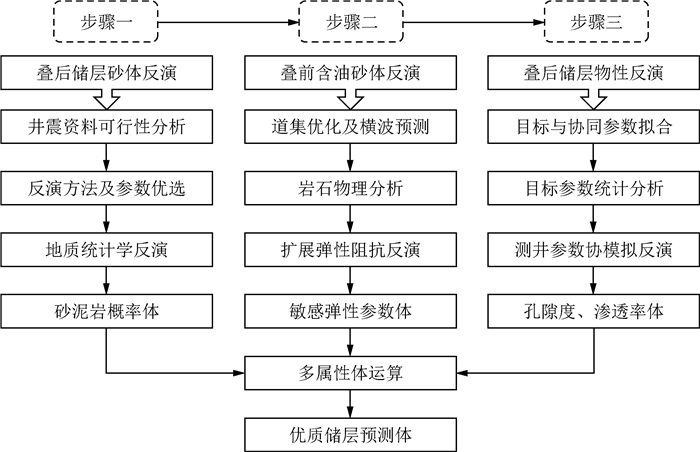
Flow chart of joint pre-stack and post-stack inversion of high-quality reservoirs
-
Figure 3.
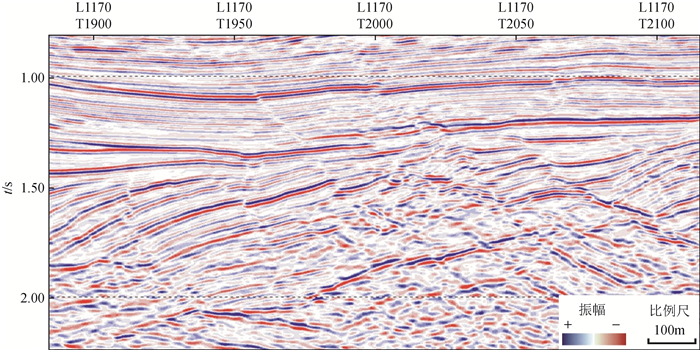
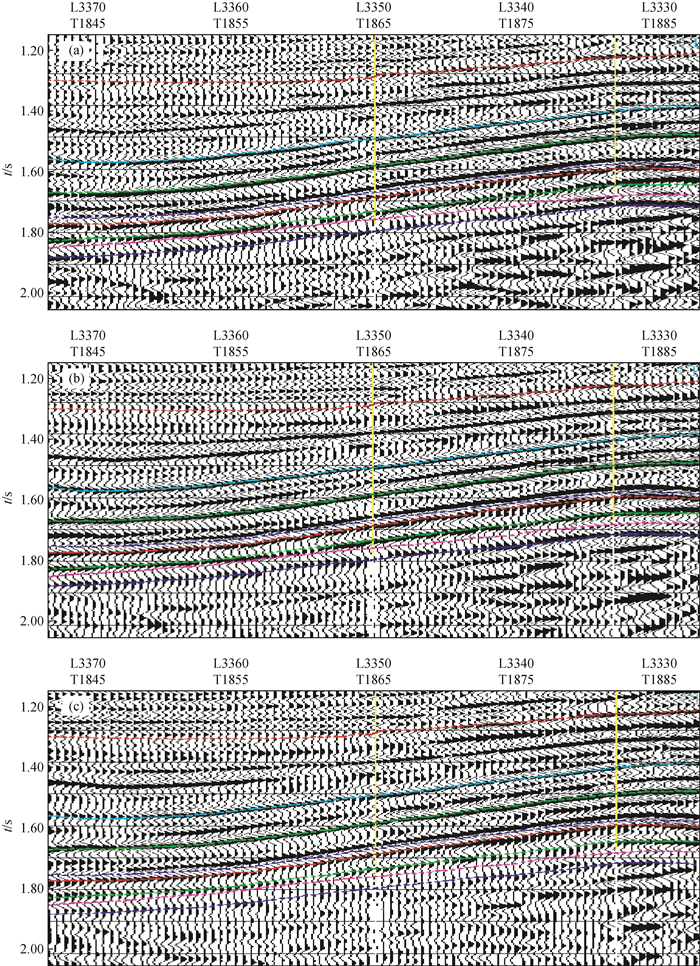
Inverse time migration seismic profile in NBR oilfield
-
Figure 4.
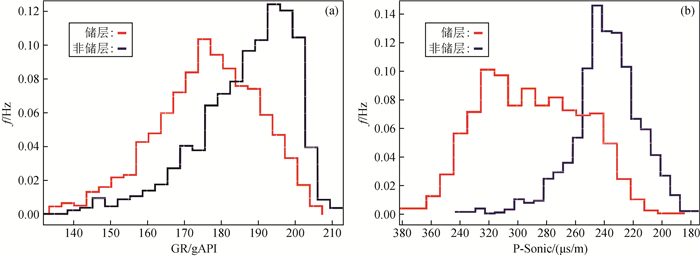
Sensitivity analysis of reservoir logging parameters
-
Figure 5.
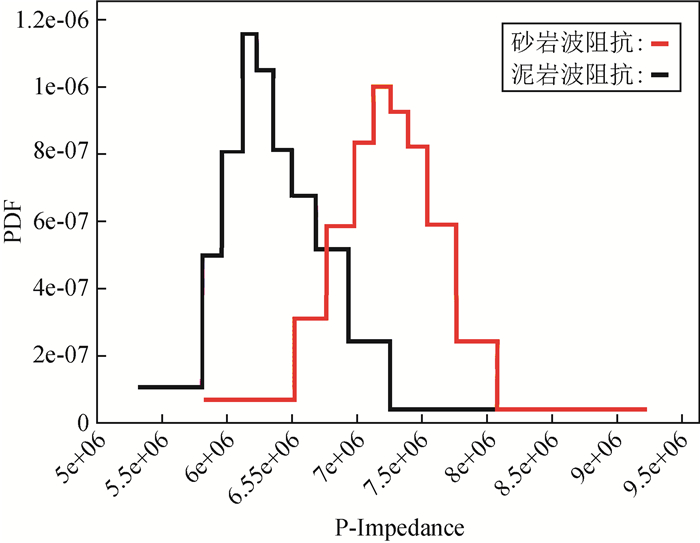
Probability density distribution functions of sand and mudstone
-
Figure 6.
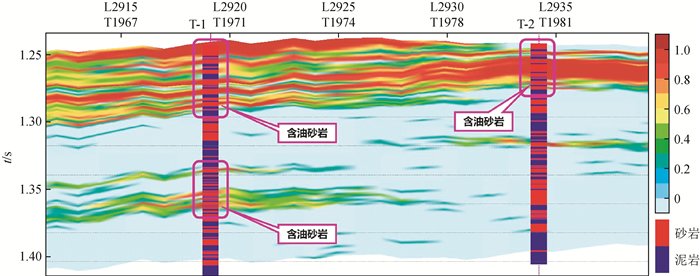
Probability profile of sandstone from geostatistical inversion
-
Figure 7.
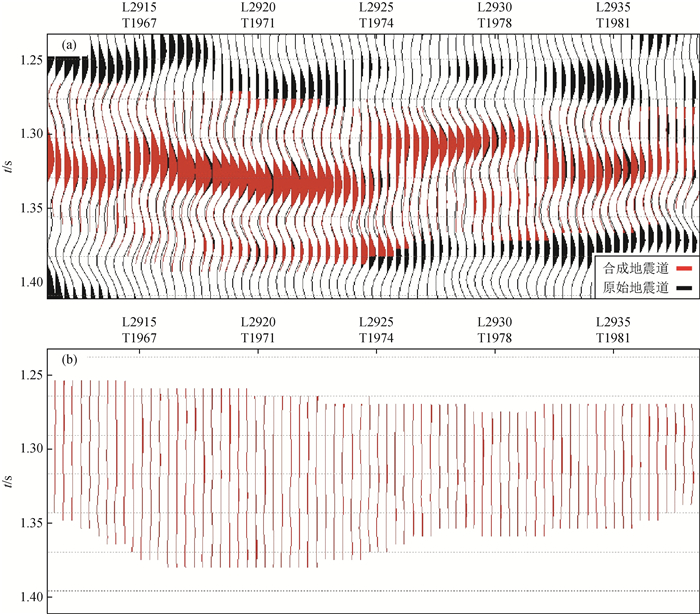
Analysis diagram of inversion evaluation by residual method
-
Figure 8.
Seismic angle gathers stacked according to the incident angle
-
Figure 9.
Cross plot between acoustic interval transit time and different parameters: (a) Poisson's ratio, (b) S-wave impedance, (c) shear modulus and (d) cross plot of shear modulus
-
Figure 10.
Cross profile of shear moduli from of well T-1 to well T-3 from pre-stack inverse
-
Figure 11.
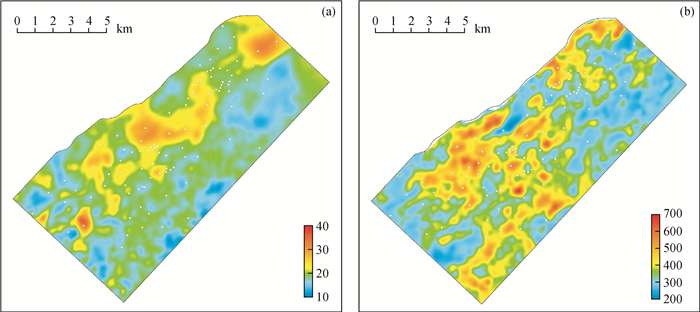
Base map of shear moduli of (a) oil group Ⅰ and (b) oil group Ⅱ in section A1
-
Figure 12.
Inversion profile of (a) porosity and (b) permeability in high-quality reservoir by Gaussian co-simulation
-
Figure 13.
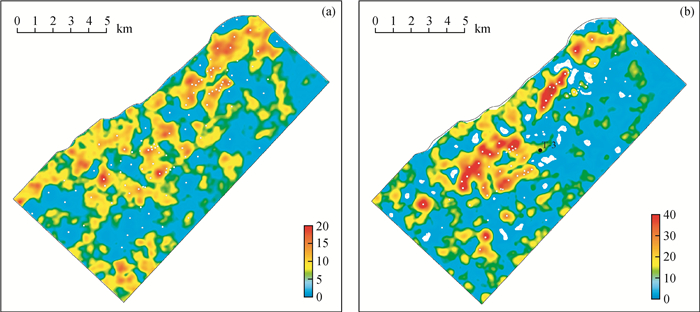
Base map of high-quality reservoirs in (a) oil groupⅠand (b) oil group Ⅱof section A1